 Fulfillment< @ >HQ Group

Your ecommerce brand is growing. Orders are increasing, best-selling products are becoming more predictable, and you're preparing to expand into new markets.
But your supply chain hasn't changed.
Your supplier still takes too long to respond. Replenishment is becoming less reliable. Product quality varies between batches. And every time sales increase, you find yourself worrying about inventory, production, or shipping delays.
Sound familiar?
These problems don't always mean your supplier is bad. Sometimes, your business has simply outgrown the supplier that helped you get started.
For Shopify brands, knowing when to upgrade a supplier can make a major difference in product quality, fulfillment efficiency, profit margins, and long-term growth.
In this guide, we'll explore 7 signs your brand may have outgrown its supplier, what to evaluate before making a change, and how to transition to a more scalable supply chain without unnecessarily disrupting sales.
A supplier that handles 20 orders a day may not be equipped to support 500 or 1,000 orders a day.
As your brand grows, demand becomes less forgiving. Production delays that were manageable during the testing stage can quickly lead to stockouts, delayed launches, and missed sales opportunities.
Watch for these warning signs:
Production lead times keep getting longer.
Your supplier struggles to increase output when demand rises.
Replenishment arrives later than promised.
Your supplier cannot provide a reliable production schedule.
Peak-season orders regularly exceed available capacity.
The issue isn't necessarily that the supplier lacks experience. They may simply have limited production resources or a business model that no longer matches your needs.
What to do:
Ask for a clear production plan, confirmed lead times, and realistic capacity commitments. If the supplier cannot consistently support your forecast, start evaluating alternatives before the next major sales period.
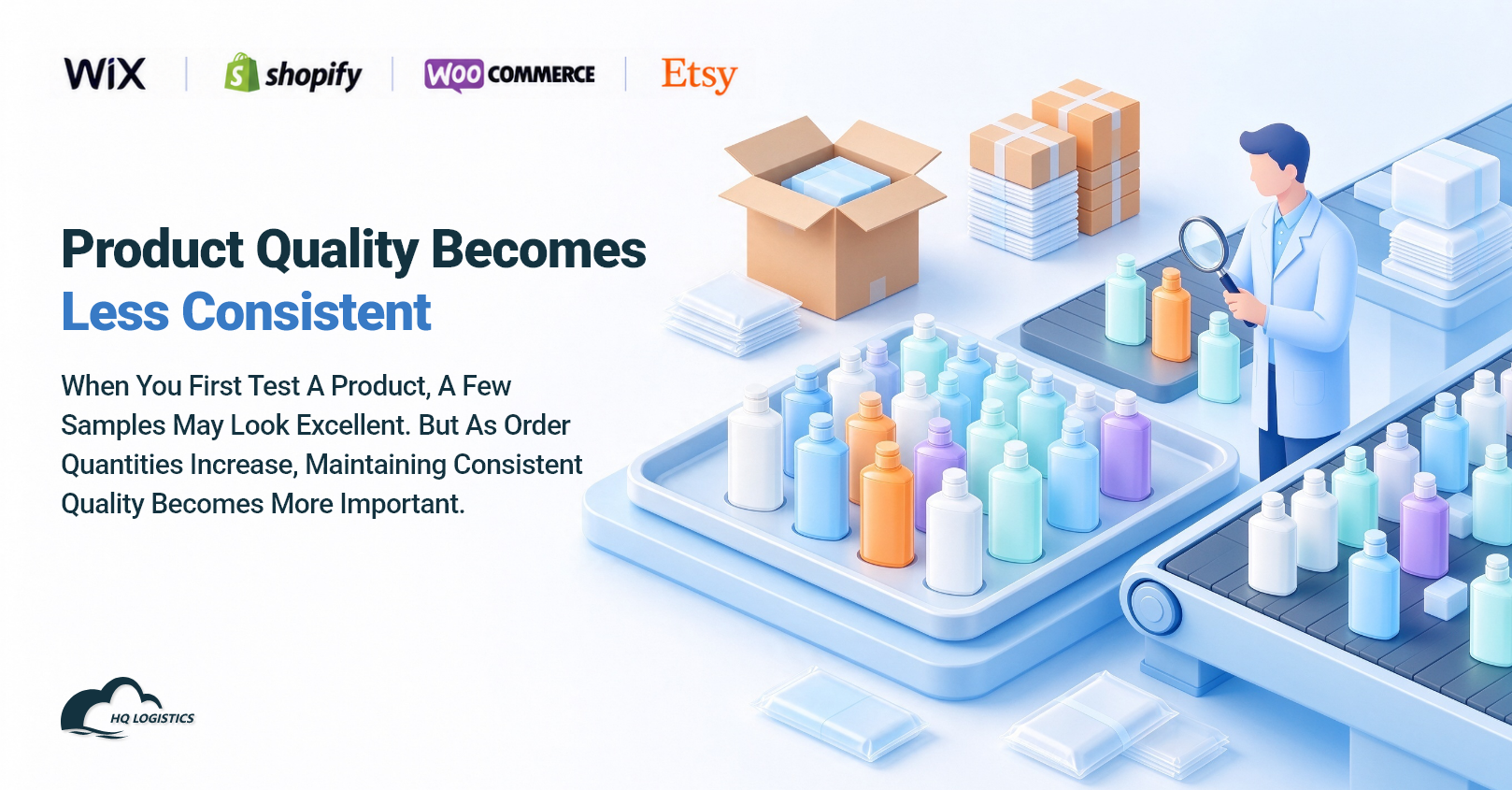
When you first test a product, a few samples may look excellent. But as order quantities increase, maintaining consistent quality becomes more important.
A product that performs well in a small test order may develop problems during larger production runs.
Common warning signs include:
Materials or dimensions vary between batches.
Colors, finishes, or product details are inconsistent.
Packaging quality declines as volume increases.
Defective products become more frequent.
Your supplier cannot explain or resolve recurring quality issues.
These problems can lead to refunds, replacements, negative reviews, and additional customer service work.
For brands investing in advertising and customer acquisition, inconsistent quality can also undermine the money spent attracting customers.
What to do:
Establish written product specifications and inspection standards. Compare samples against mass-production batches and require corrective action when problems occur. If your supplier cannot maintain agreed quality standards, consider a supplier with stronger quality control capabilities.
As sales grow, you would normally expect better purchasing efficiency. However, rising product costs, packaging fees, shipping expenses, and unexpected charges can gradually reduce your margins.
Your supplier may still offer a competitive unit price, but that doesn't automatically mean your total costs are competitive.
Evaluate the full cost structure:
Product Cost + Packaging + Inspection + Storage + Processing + Shipping + Returns = Total Fulfillment Cost
For example, a supplier with a lower product price may have longer production lead times or inconsistent quality. These issues can create additional storage costs, emergency shipping expenses, or higher return rates.
When comparing suppliers, look beyond the quotation.
Ask whether the supplier can support more competitive factory pricing, stable quality, better packaging options, and more predictable replenishment as your order volume increases.
What to do:
Review your total cost per successfully delivered order. Compare suppliers using the same product specifications, order quantities, shipping requirements, and service scope. This gives you a more realistic picture of which option offers better overall value.
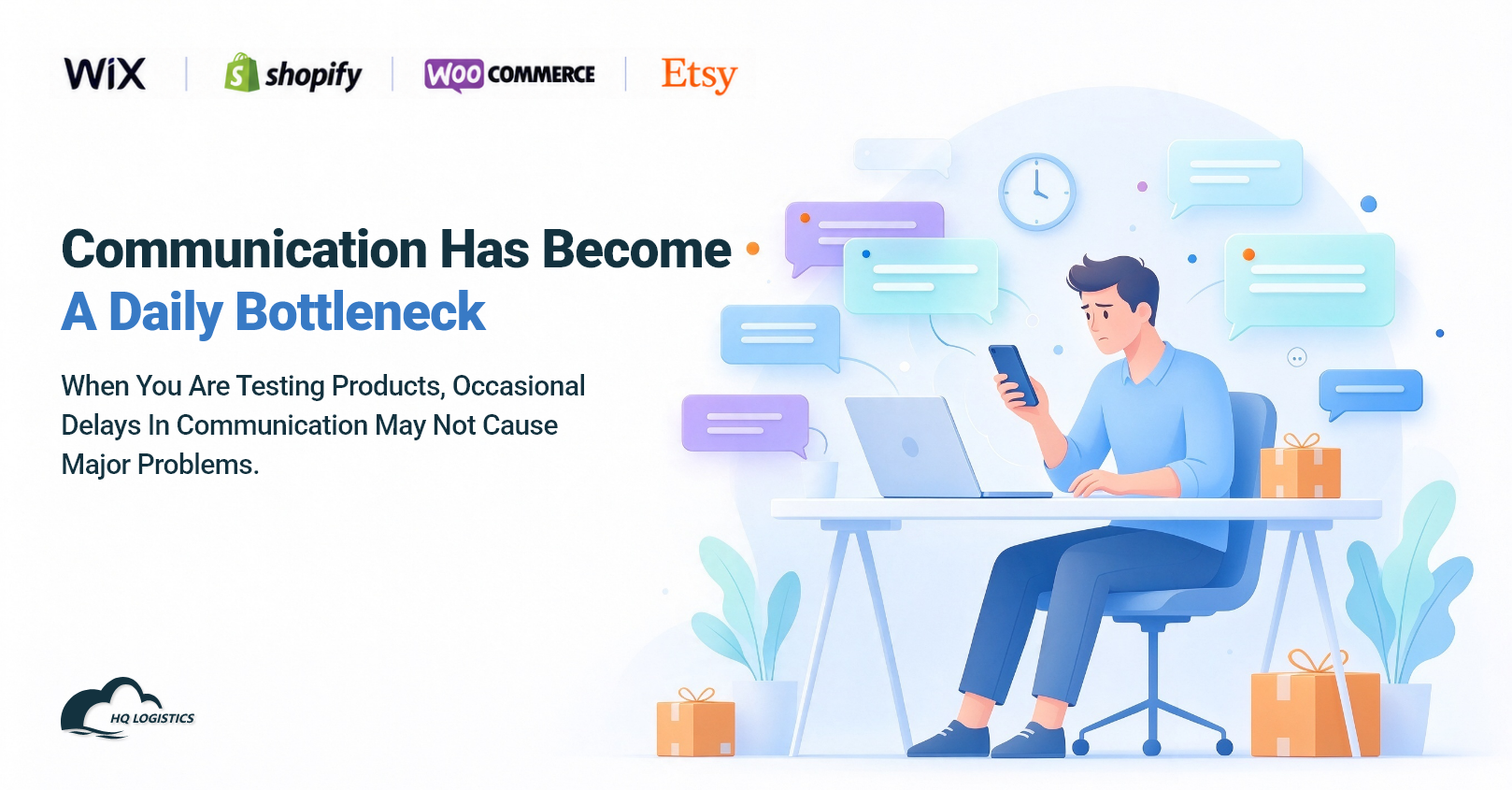
When you are testing products, occasional delays in communication may not cause major problems.
At scale, slow communication can affect your entire operation.
You may need to confirm production status, check inventory, approve packaging, resolve quality issues, or arrange urgent replenishment. If every question requires repeated follow-ups, your team spends valuable time chasing updates instead of growing the business.
Look for these signals:
Messages frequently go unanswered.
Production updates are vague or incomplete.
Different contacts provide conflicting information.
Problems are reported only after deadlines have passed.
Your supplier offers little visibility into inventory or production.
A growing brand needs more than a supplier who responds eventually. It needs a partner who communicates clearly and flags potential problems early.
What to do:
Set expectations for response times, progress reports, escalation procedures, and order-status updates. If communication remains unreliable, consider a supplier or fulfillment partner with clearer processes and dedicated account support.
In the early stages, selling a standard product with basic packaging may be enough to test demand.
As your brand develops, you may want to create a more recognizable customer experience.
That can include:
Custom packaging and branded mailers
Logo printing and product labels
Thank-you cards and product inserts
Private labeling
Product modifications
Customized bundles
More consistent packaging standards across orders
Not every supplier can support these requirements, particularly when customization involves several stages of production and fulfillment.
If your supplier can only provide a standard product with limited packaging choices, your brand may have reached the limits of that relationship.
What to do:
Identify which customizations matter most to your customers and margins. Ask prospective suppliers about minimum order quantities, setup costs, sample approval, production lead times, and quality checks for customized products.
You don't need to customize everything immediately. Start with the changes that help differentiate your brand and improve the customer experience.
Growing brands need to balance two competing risks: running out of bestsellers and holding too much slow-moving inventory.
A supplier that only reacts when you place an order may not provide enough support for this balancing act.
You may be outgrowing your supplier if:
Popular SKUs repeatedly sell out before replenishment arrives.
Your supplier cannot provide dependable restocking estimates.
You have little visibility into production or inbound inventory.
You must place emergency orders to maintain availability.
Inventory planning depends entirely on manual messages and spreadsheets.
For Q4, these problems become particularly important. Holiday promotions can create demand spikes, while international transportation and warehouse receiving add time before new inventory becomes available for sale.
What to do:
Build a replenishment plan around sales forecasts, supplier lead times, safety stock, and inventory already in transit.
For proven bestsellers, consider whether pre-stocking inventory in a warehouse closer to your customers would improve delivery speed. New or uncertain products may be better suited to smaller test quantities until demand becomes clearer.
The right strategy depends on cash flow, sales patterns, product characteristics, and your ability to replenish inventory reliably.
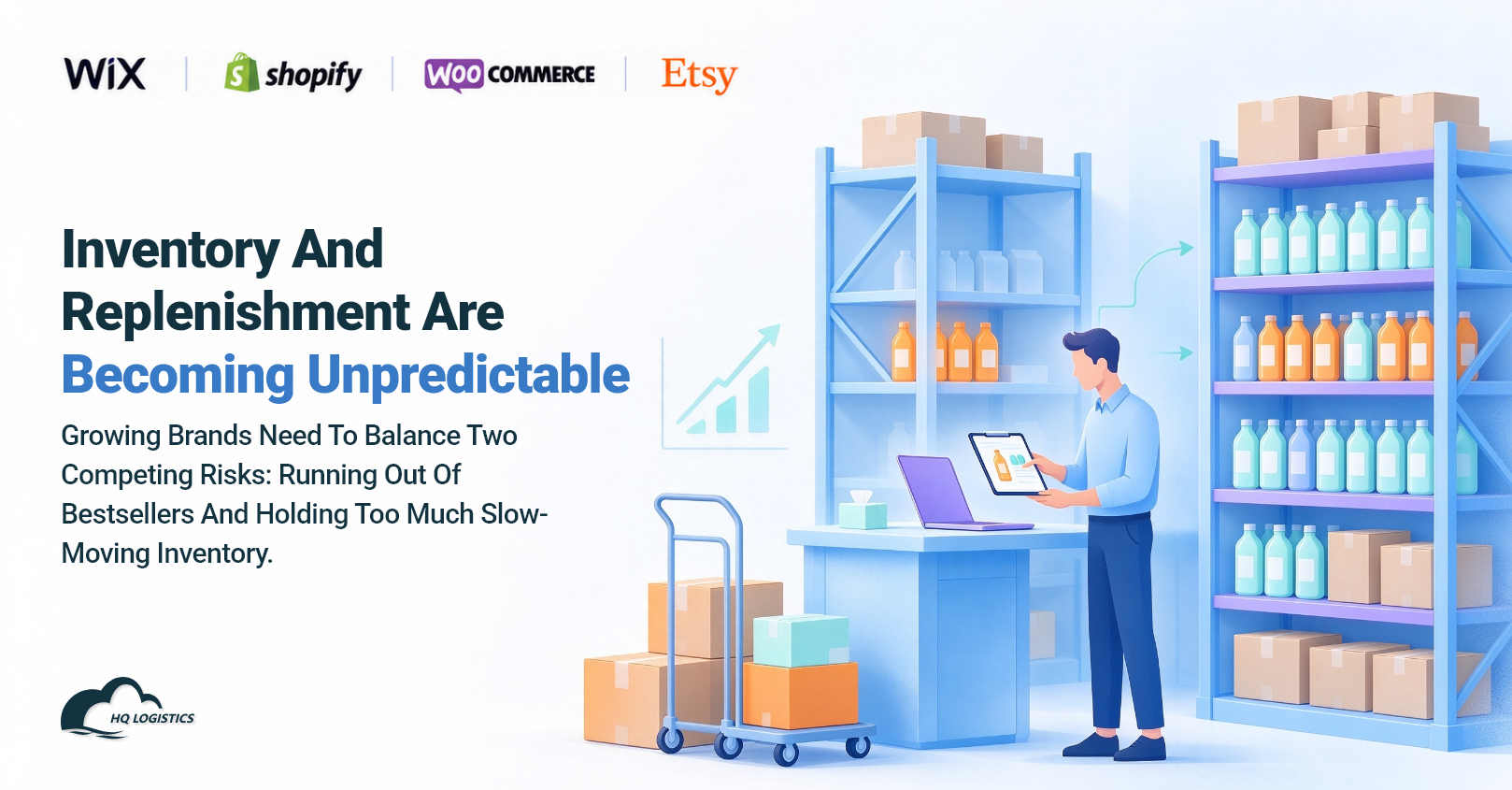
This is one of the clearest signs that your business needs a different level of support.
As your brand grows, you may need help with more than purchasing products. You may also need to coordinate quality inspection, inventory planning, packaging, warehousing, order processing, and international shipping.
If you manage each of these activities through separate providers, you become responsible for connecting the entire process.
That creates more communication, more handoffs, and more opportunities for delays.
A more integrated supply chain can connect:
Sourcing → Quality Control → Inventory Planning → Warehousing → Custom Packaging → Fulfillment → Global Shipping
This approach can make it easier to identify bottlenecks and coordinate changes when demand increases.
What to do:
Map your current supply chain and identify where the most time, money, and management effort are being spent. If the biggest problems happen between providers rather than within one service, a more integrated sourcing and fulfillment partner may be worth considering.
Not every problem requires an immediate supplier change.
Before making a decision, determine whether the issue is temporary, caused by unclear expectations, or a fundamental limitation in your supplier's capabilities.
Use this comparison as a starting point:
| Situation | Recommended Next Step |
|---|---|
| One-off production delay | Review the cause and recovery plan |
| Unclear product specifications | Standardize specifications and inspection criteria |
| Occasional communication issues | Agree on response times and escalation procedures |
| Repeated quality problems | Require corrective action and verify improvements |
| Persistent capacity limitations | Evaluate alternative suppliers |
| Limited customization options | Compare suppliers with suitable production capabilities |
| Fragmented sourcing and fulfillment | Consider a more integrated supply chain partner |
The goal is not to change suppliers at the first sign of trouble.
It's to determine whether your current supplier can realistically support your next stage of growth.
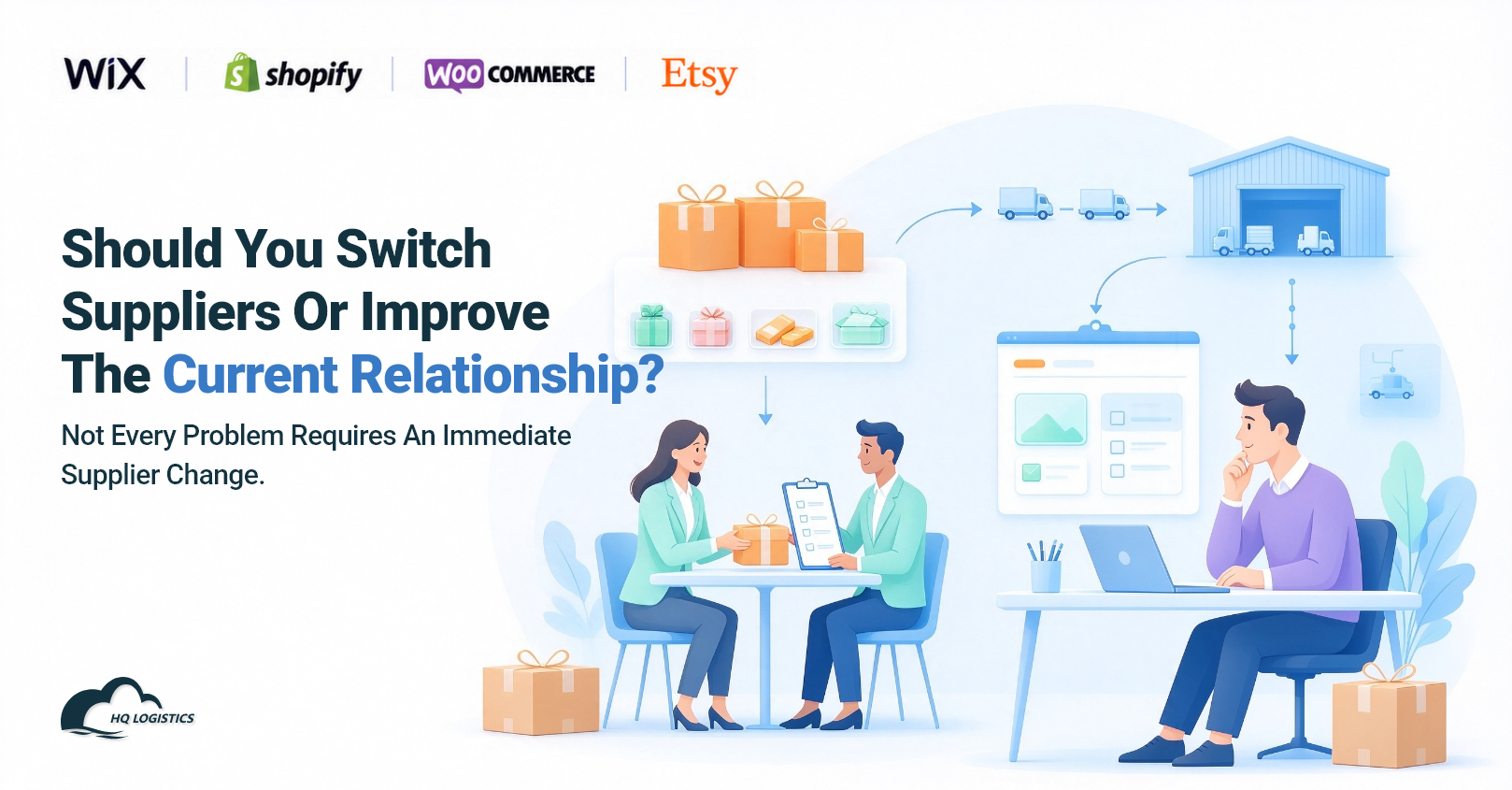
If a change is necessary, a structured transition can help reduce risk.
Document production lead times, defect rates, product costs, shipping performance, communication quality, and recurring problems.
This helps you identify exactly what the new supplier needs to improve.
Prepare clear documentation covering product dimensions, materials, colors, sizes, packaging, labels, quality standards, and any required customization.
Use the same specifications when comparing suppliers so that quotations and samples can be evaluated fairly.
Compare samples from potential suppliers against your approved product. Check functionality, materials, dimensions, appearance, and packaging before committing to a large order.
For higher-volume orders, arrange appropriate pre-shipment inspections.
Start with a manageable quantity and evaluate actual performance. Track production time, defect rates, packaging accuracy, communication, and delivery preparation.
Avoid transferring all your production until the new supplier has demonstrated that it can meet your requirements.
Continue monitoring current stock, open orders, and replenishment timelines while the new supplier is being tested.
Maintain suitable safety stock where financially practical, and avoid cancelling a functioning supply arrangement before you have a credible replacement plan.
Compare the new supplier against your original performance benchmarks.
Only increase order quantities when product quality, production reliability, total costs, and communication meet your business requirements.
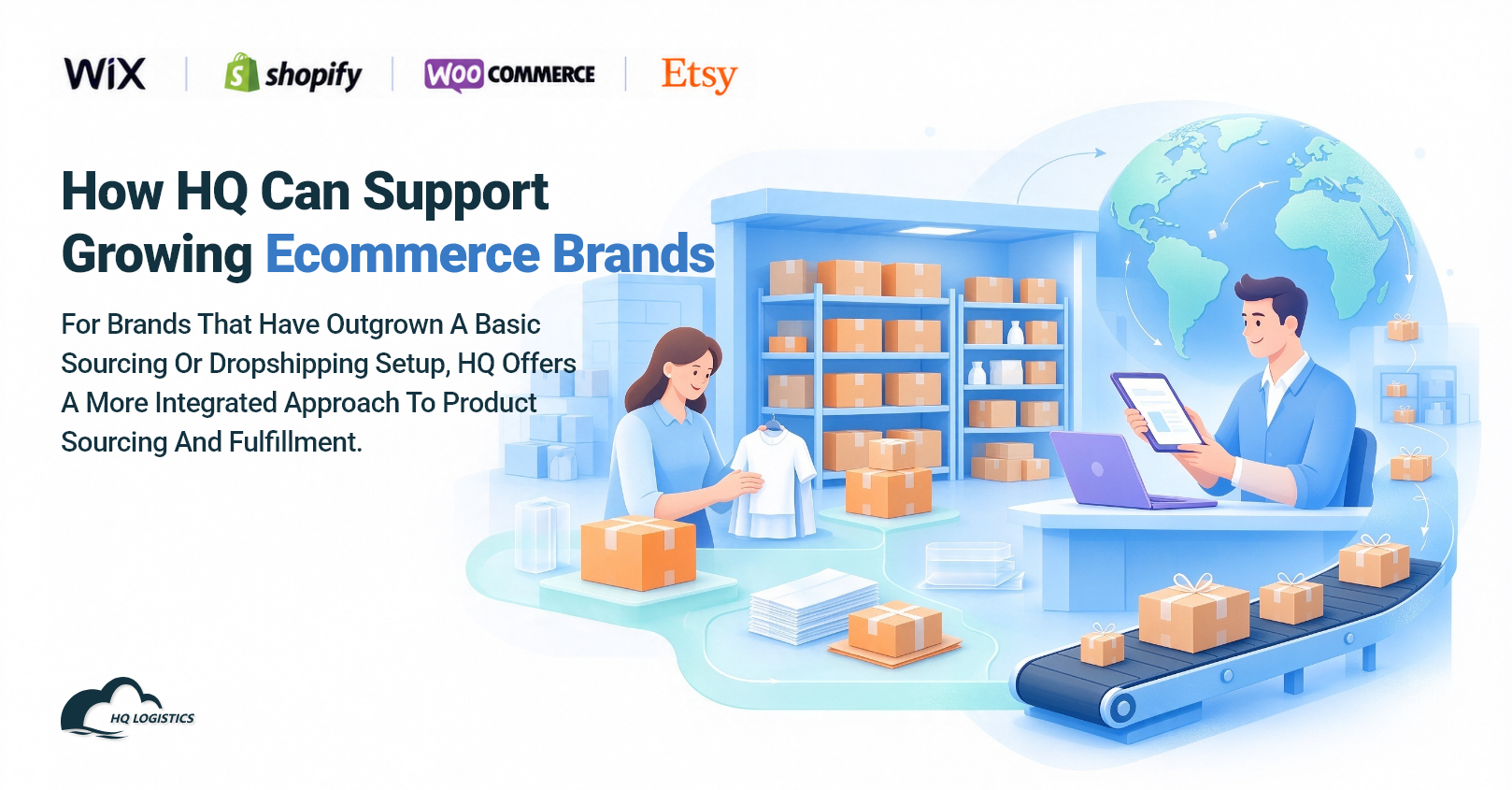
For brands that have outgrown a basic sourcing or dropshipping setup, HQ offers a more integrated approach to product sourcing and fulfillment.
Depending on your requirements, support can include:
Factory-direct product sourcing | No-MOQ product testing | Supplier comparison | Quality inspection | Product photography | Custom packaging | Private labeling | China warehousing | Overseas warehousing | Shopify integration | Automated order fulfillment | Tracking synchronization | Global shipping
Connecting these services can help reduce the coordination burden of managing multiple providers independently.
For example, a brand can test a product, review quality, prepare custom packaging, plan inventory, and coordinate fulfillment through a connected workflow.
For growing Shopify brands, this can be particularly useful when moving from product testing to repeatable, higher-volume sales.
The right solution still depends on your product category, order volume, target markets, inventory strategy, and required service level.
Outgrowing a supplier doesn't necessarily mean the supplier has done anything wrong.
It means your business has changed.
The supplier that helped you test your first product may not have the production capacity, customization options, inventory visibility, or fulfillment support you need today.
Pay attention to the signals: increasing delays, inconsistent quality, shrinking margins, slow communication, limited branding options, unpredictable replenishment, and fragmented supply chain management.
If these issues persist despite clear expectations and corrective action, it may be time to evaluate alternatives.
Choose suppliers for the business you're building—not just the business you started with.
With clear specifications, careful testing, and a controlled transition plan, you can build a supply chain that supports growth without taking unnecessary risks.

Common signs include recurring production delays, inconsistent product quality, limited capacity, rising total costs, slow communication, restricted customization, and unreliable replenishment.
Not automatically. First, confirm whether your current supplier can meet your forecasted demand and quality requirements. Consider alternatives if capacity or service limitations persist.
Review current inventory and open orders, test the new supplier with a controlled trial order, maintain suitable safety stock, and transition gradually rather than moving all production at once.
Compare product specifications, unit pricing, minimum order quantities, production lead times, quality standards, packaging options, communication, replenishment reliability, and total delivered cost.
A suitably equipped fulfillment partner may coordinate sourcing, quality inspection, inventory planning, warehousing, packaging, and shipping. Confirm which services are included and how responsibilities are divided before signing an agreement.
📩 Email: zoye@fulfillment-cn.com
Previous Recommendations


how to know when to change suppliers, signs you have outgrown your supplier, Shopify supplier management, ecommerce supplier sourcing, switching suppliers for ecommerce, supplier reliability, product quality control, inventory replenishment, ecommerce fulfillment partner, factory-direct sourcing, supply chain management, Shopify fulfillment




Don't wait until next year, grab the chance on 2025. Here are some recommended ecommerce topic you can choose.
Thanks to the support and trust from our customers. Flashback with our beloved partners.