 Fulfillment< @ >HQ Group

When Shopify sellers search for new products, one of the first things they compare is the purchase price.
A product that costs $2 instead of $2.50 may look like the better choice.
But product cost is only one part of the equation.
A cheaper product can create higher costs through:
Poor product quality | Higher return rates | Customer complaints | Additional replacement orders | Higher shipping costs | Negative reviews | Lower customer retention
For growing ecommerce brands, the cheapest product is not always the most profitable product.
Sometimes, the cheapest product can become your most expensive mistake.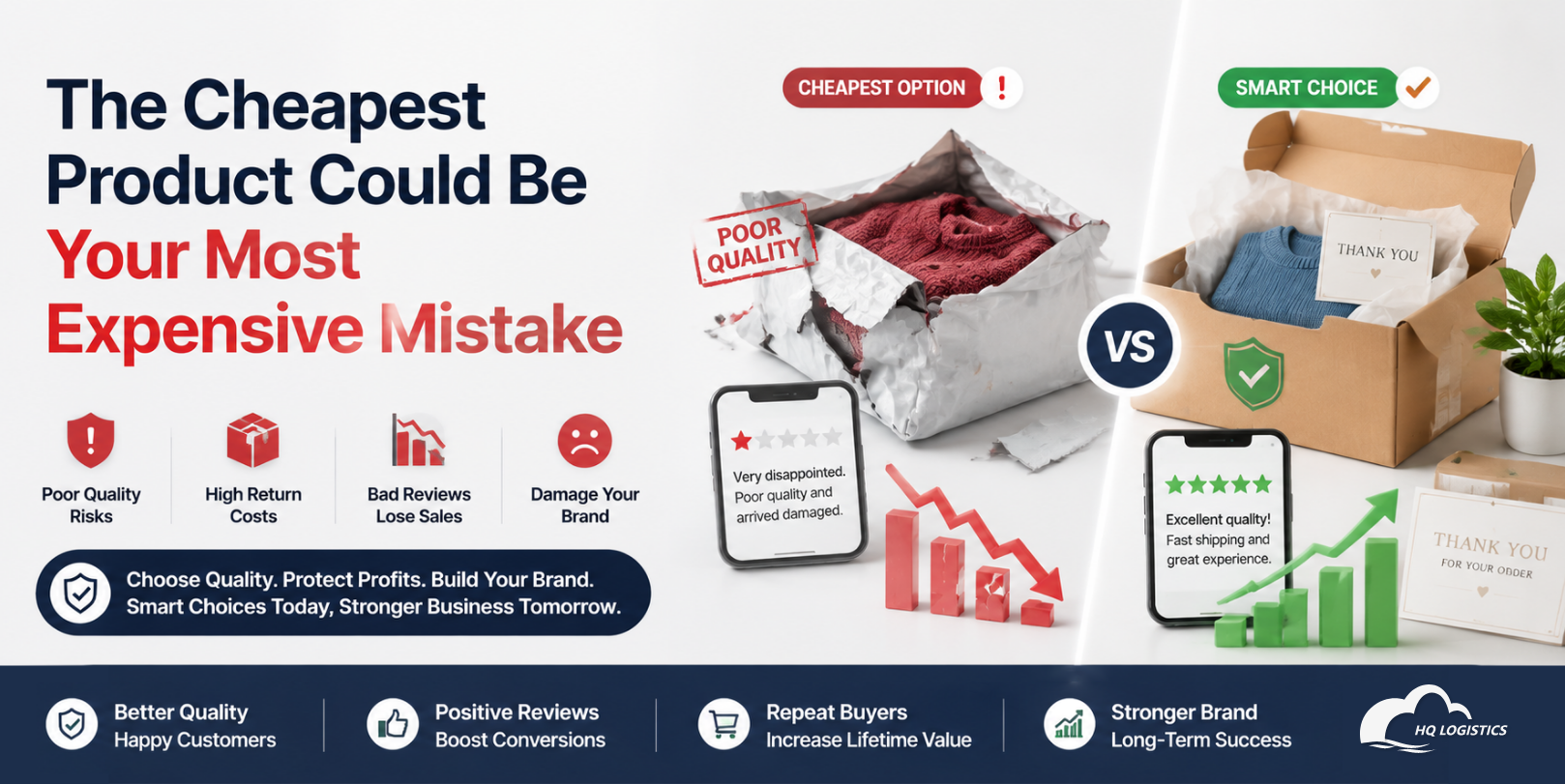
Imagine two suppliers offer the same product.
Supplier A
Product cost: $2.00
Quality: Average
Defect rate: Higher
Packaging: Basic
Supplier B
Product cost: $2.30
Quality: Better
Defect rate: Lower
Packaging: More reliable
At first glance, Supplier A looks cheaper.
But if the cheaper product generates more refunds, replacements, complaints, and negative reviews, the final cost can quickly become higher.
The real question is not:
"How much does the product cost?"
It is:
"How much does this product actually cost my business?"
Quality is one of the biggest risks when choosing products based only on price.
Low-cost products may have:
Inconsistent materials | Poor finishing | Weak packaging | Incorrect specifications | Higher defect rates
For a Shopify brand, one poor-quality order can affect more than one customer.
A negative review can influence future customers.
A high return rate can also increase operating costs.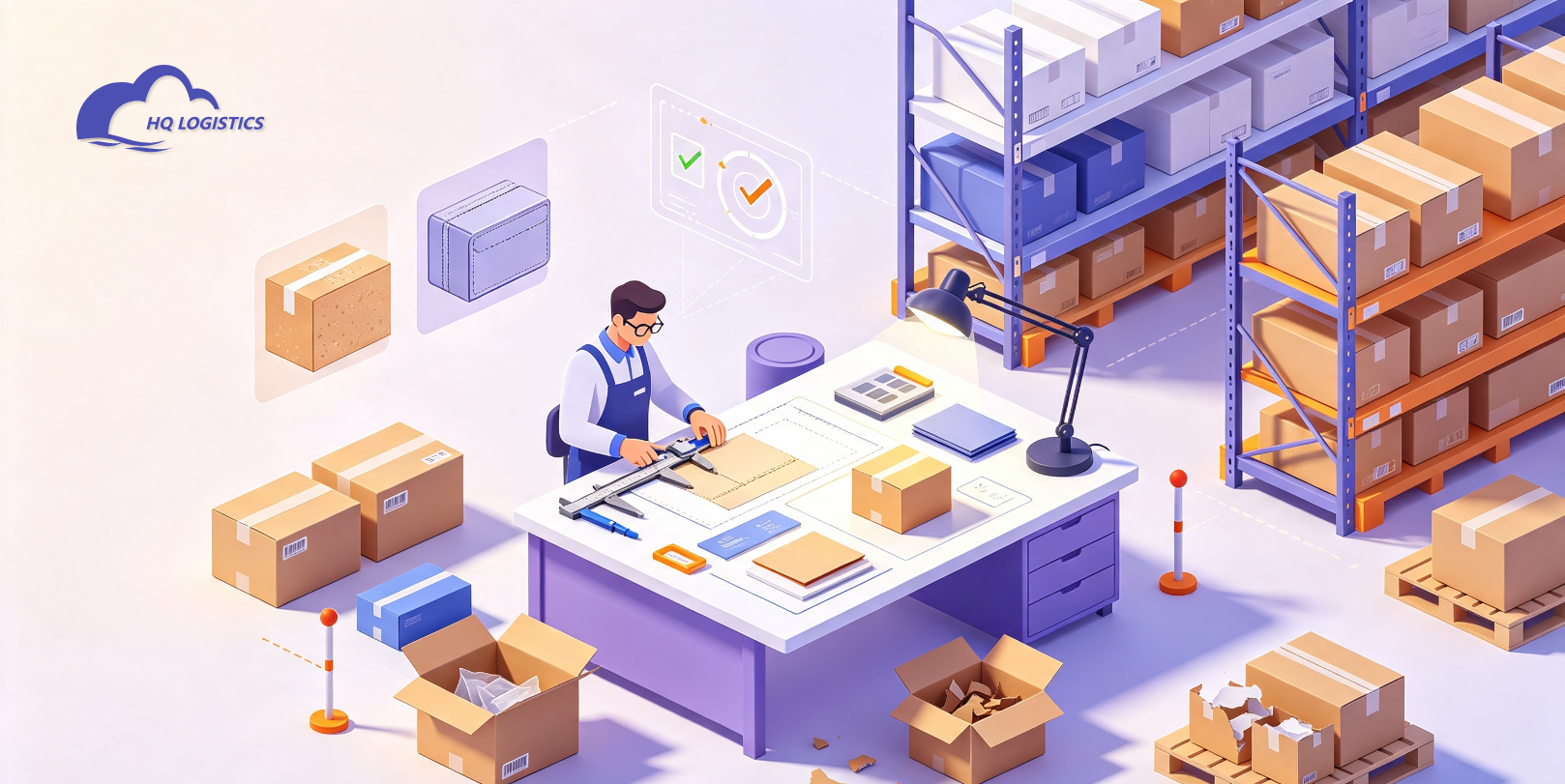
A product may have a healthy margin on paper.
But returns can quickly change the calculation.
For example:
Product selling price: $30
Product cost: $8
At first, the margin appears attractive.
But after adding:
Shipping + fulfillment + payment fees + return handling + replacement costs
the actual profit may be much lower.
If poor quality increases the return rate, the seller may lose money even though the original product price looked competitive.
Product price and shipping cost should always be evaluated together.
A low-cost product can become expensive if it is:
Oversized | Heavy | Poorly packaged | Difficult to stack | Inefficient to ship
For example, reducing the product cost by $1 may not matter if inefficient packaging adds $2 to shipping.
This is why smart ecommerce brands evaluate total landed cost, not just supplier pricing.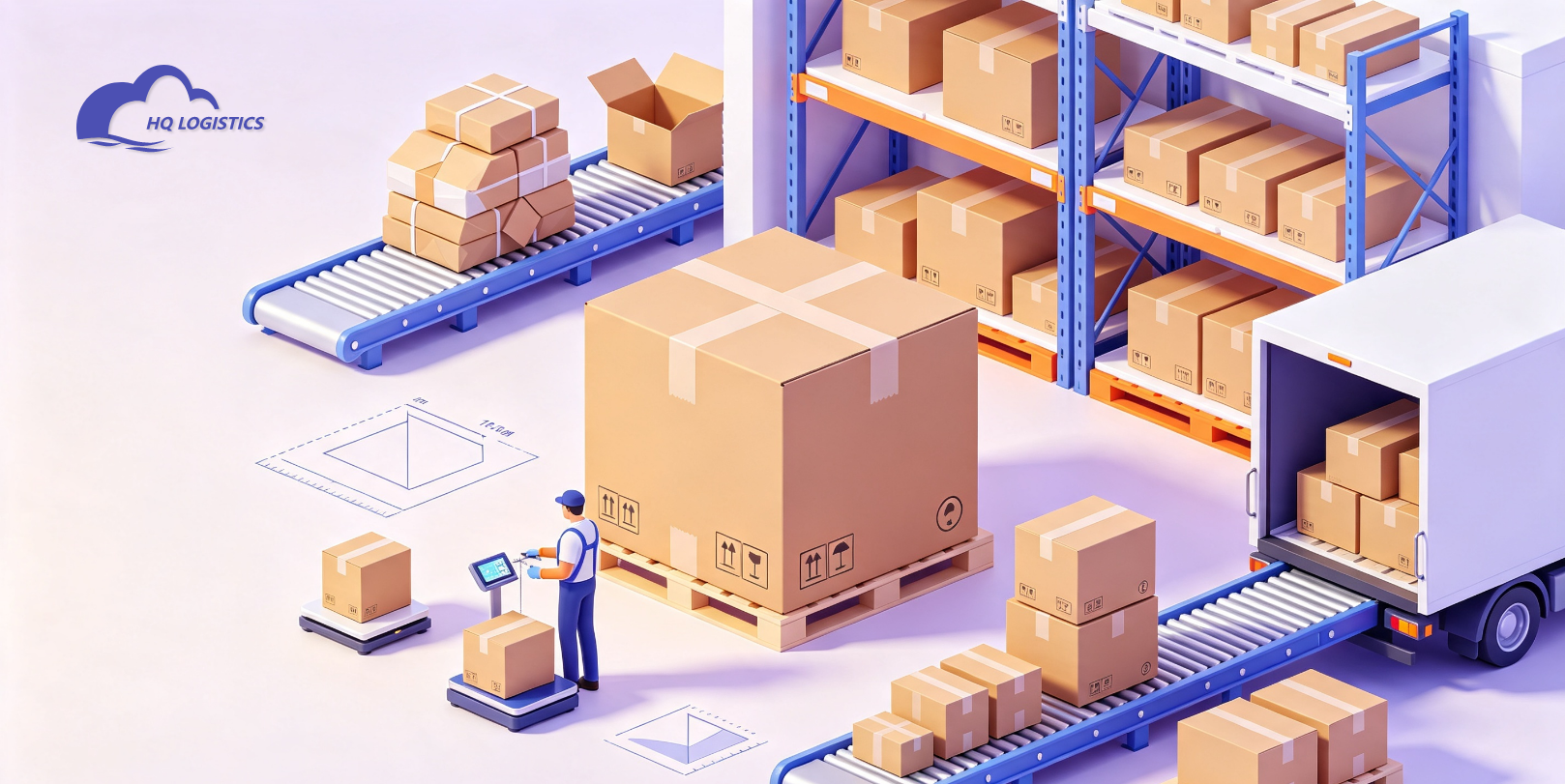
Packaging is often overlooked when sellers compare suppliers.
Good packaging can:
Reduce product damage | Improve warehouse handling | Reduce shipping volume | Improve customer experience | Support your brand image
For growing Shopify brands, packaging should be considered part of the product strategy.
A slightly more expensive product with optimized packaging can sometimes deliver a lower total cost.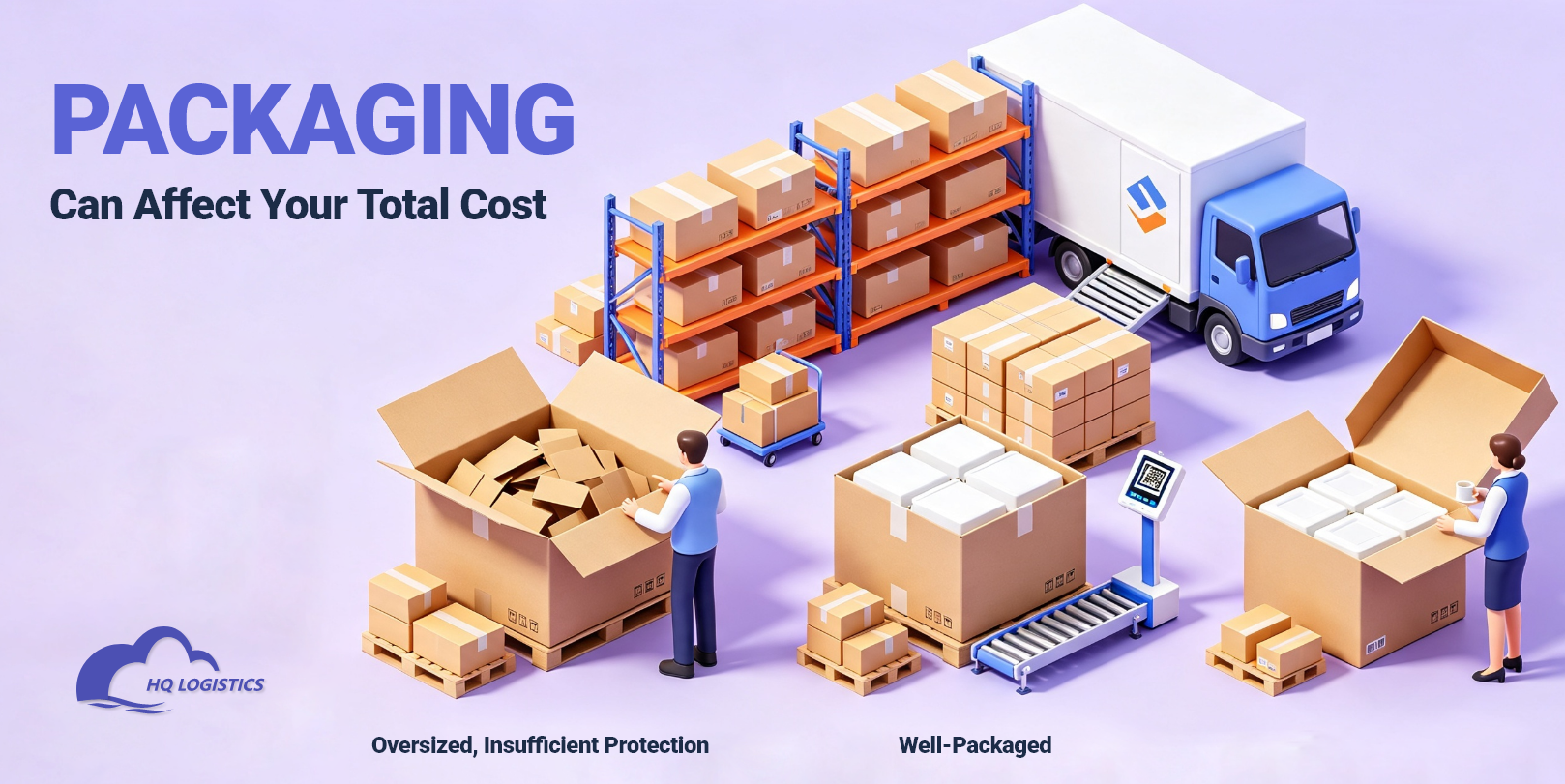
Customers don't know your supplier.
They only see your brand.
If customers receive:
❌ Damaged products | ❌ Poor packaging | ❌ Incorrect items | ❌ Low-quality materials
they are unlikely to blame the factory.
They blame the Shopify store.
This can lead to:
Negative reviews | Refund requests | Customer complaints | Lower conversion rates | Reduced repeat purchases
Your supplier's mistake can quickly become your brand problem.
A low product price is not useful if the supplier cannot maintain stable inventory.
Common problems include:
Sudden stockouts | Production delays | Unstable quality | Changing product specifications | Slow communication
For products generating daily orders, supplier stability becomes even more important.
A Shopify store cannot scale if its best-selling product is constantly unavailable.
Before placing a large order, sellers should test the product.
A sample inspection can help evaluate:
Product quality | Materials | Size | Functionality | Packaging | Product consistency
This is especially important for brands planning to scale a new product.
Spending a small amount on testing can help prevent a much larger inventory mistake.
A winning product is not enough.
You also need a supplier capable of supporting growth.
When evaluating suppliers, Shopify sellers should consider:
Is the pricing competitive?
Can the supplier maintain consistent quality?
Can they handle increased demand?
Can they replenish inventory quickly?
Can they respond when problems occur?
Can they support custom packaging or branding?
Instead of comparing suppliers based only on price, consider a broader scorecard:
| Factor | What to Evaluate |
Product Cost | Purchase price |
Quality | Defect and return risk |
Shipping | Weight, size and route |
Packaging | Protection and volume |
Supplier Stability | Stock and production capacity |
Fulfillment | Processing speed |
Returns | Return and replacement handling |
Branding | Custom packaging and product options |
This gives sellers a much clearer picture of the actual business cost.
Choosing the right product is only the first step.
HQ LOGISTICS supports ecommerce brands across sourcing, quality control, fulfillment, and global logistics.
We help sellers access competitive supplier pricing and factory-direct sourcing options.
The goal is not simply to find the cheapest supplier, but to find the right balance between cost | quality | reliability.
For each product, we can help identify suitable suppliers and alternative sourcing options.
This helps reduce:
Stockout risks | Supplier dependency | Production disruptions
Before larger orders are placed, sellers can inspect samples and verify product quality.
Quality checks can also be performed before shipment.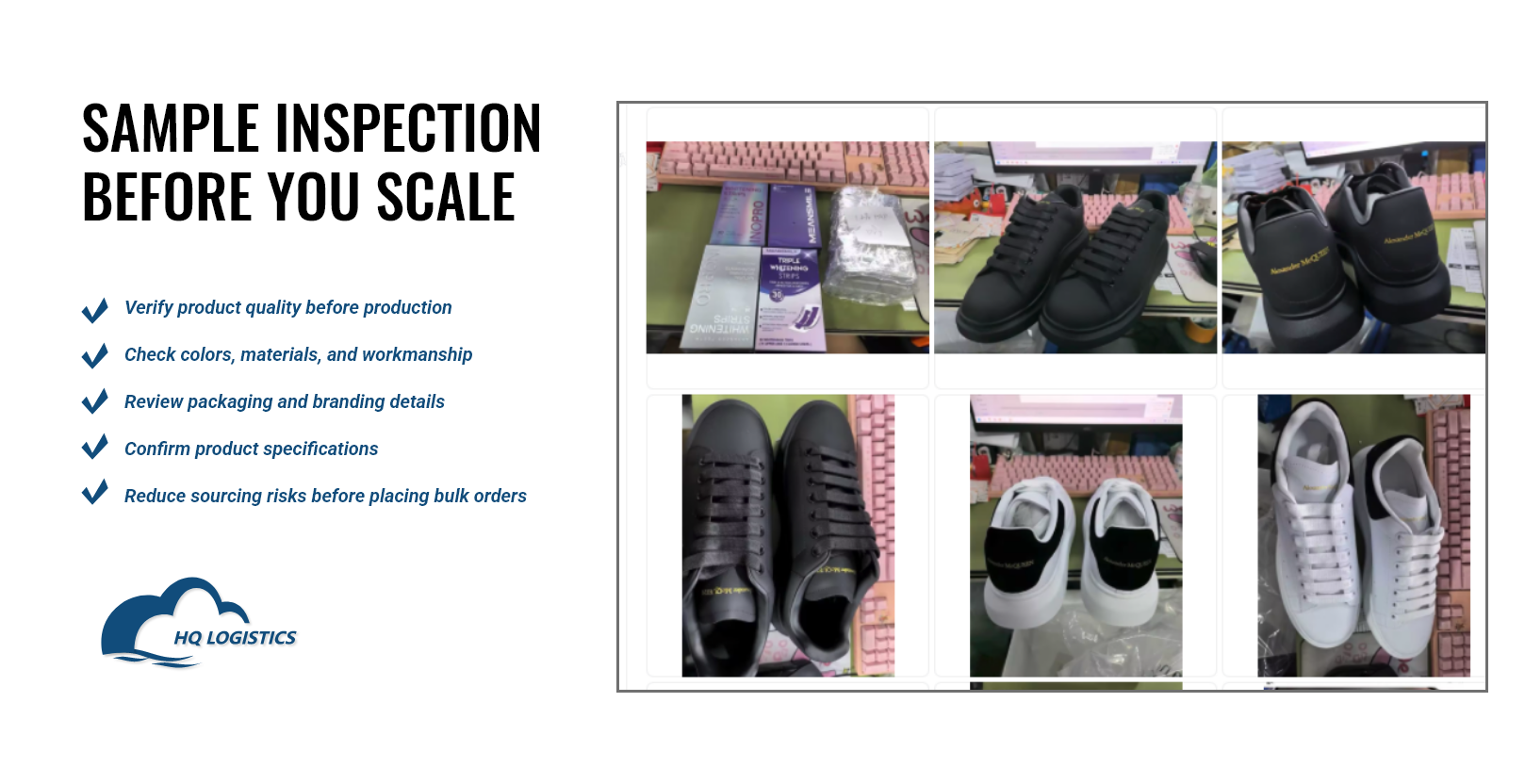
Different products require different fulfillment strategies.
We help match products with suitable solutions based on:
Product type | Destination | Order volume | Shipping requirements
We compare logistics channels based on:
Cost | Speed | Destination | Product characteristics
This helps sellers avoid choosing a product that looks cheap but becomes expensive to ship.
For growing brands, packaging can be customized to improve:
Brand recognition | Customer experience | Product protection
Shipment visibility helps sellers monitor orders and respond quickly to delivery issues.
Growing Shopify brands can receive direct support for:
Product sourcing | Inventory planning | Fulfillment | Shipping | Order issues
The goal of product sourcing should not be:
Find the cheapest product.
It should be:
Find the most profitable product that can scale reliably.
That means evaluating:
Product Cost + Quality + Shipping + Fulfillment + Returns + Customer Experience
A slightly higher purchase price can sometimes produce significantly better overall results.
No. Product quality, shipping costs, return rates, supplier reliability, and customer experience can have a much greater impact on profitability.
Compare pricing, quality, production capacity, lead times, communication, customization options, and fulfillment capabilities.
Yes. Sample inspection helps sellers identify quality and packaging problems before committing to larger inventory quantities.
Yes. Better quality can reduce refunds, replacements, negative reviews, and customer complaints.
Consider the total cost of sourcing, fulfillment, shipping, returns, and customer service.
The lowest product price may look attractive when you're comparing supplier quotations.
But ecommerce profitability is more complicated than the purchase price.
A cheaper product can become expensive when it creates:
Quality Problems → Returns → Shipping Costs → Customer Complaints → Lost Customers
Smart Shopify sellers look beyond the initial price.
They choose products that offer the right combination of competitive cost, reliable quality, stable supply, efficient fulfillment, and scalable logistics.
Because in ecommerce, the cheapest product isn't always the cheapest decision.
HQ LOGISTICS helps Shopify and ecommerce brands with:
Product Sourcing | Supplier Management | Sample Inspection | Quality Control | Warehousing | Fulfillment | Global Shipping | Custom Packaging
Choose products based on total business value—not just the lowest quotation.
📩 Email: zoye@fulfillment-cn.com
Previous Recommendations


cheap products dropshipping / best products for Shopify / Shopify product sourcing / ecommerce product sourcing / dropshipping supplier / China sourcing agent / product quality control / sample inspection ecommerce / Shopify fulfillment / ecommerce supply chain / profitable dropshipping products / product sourcing strategy



Don't wait until next year, grab the chance on 2025. Here are some recommended ecommerce topic you can choose.
Thanks to the support and trust from our customers. Flashback with our beloved partners.